Midjourney V7: Creating Masterpieces with AI
From digital art to photo-realistic portraits, Midjourney V7 is changing how we visualize ideas. Learn why artists and designers are obsessed with it.
AI TOOLS
3/5/20262 min read
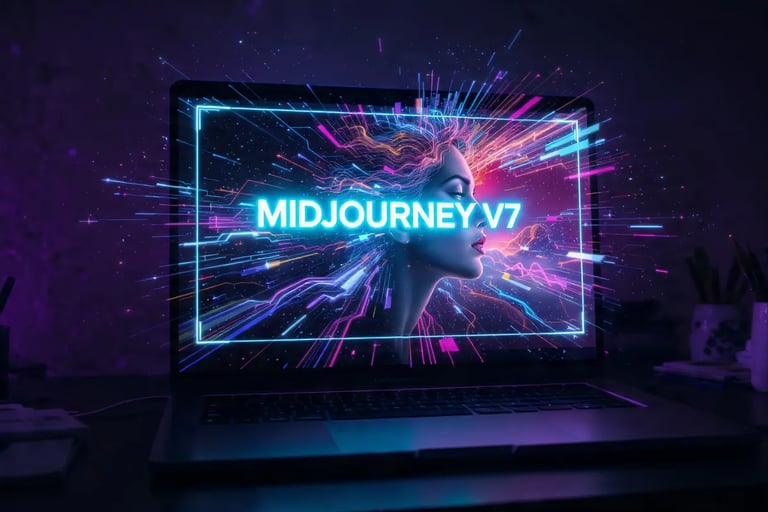
The Visual Art Revolution: Mastering AI Image Generation with Midjourney
Artificial intelligence has officially expanded beyond basic image generation—it has evolved into an indispensable creative co-pilot for artists, graphic designers, and marketing professionals.
With major model advancements like Midjourney V7, the gap between human visual imagination and high-resolution digital creation has virtually disappeared. Whether developing video game concept art, designing book covers, or producing commercial ad assets, modern text-to-image AI converts conceptual prompts into stunning, production-ready visuals.
What Makes Midjourney a Visual Game-Changer?
Midjourney stands out in the generative media landscape due to its signature artistic curation and visual aesthetics. Unlike generic algorithms that often yield flat or repetitive outputs, Midjourney’s core engine prioritizes dynamic lighting, balanced composition, and fine material texturing.
Core Technical Upgrades & Capabilities:
Style & Character Consistency:
Lock in customized artistic styles (--sref) or specific brand aesthetic profiles across image sets to maintain commercial visual identity.Hyper-Photorealistic Precision:
Generate tactile material rendering—including natural skin textures, woven fabrics, light refraction, and liquid surface physics—with studio-grade accuracy.Advanced Typography & Vector Elements:
Render legible text, clean geometric logos, and crisp poster layouts directly inside generated visual frames.Rapid Prototyping Modes: Utilize specialized draft workflows to iterate through visual concepts at high speeds before rendering final high-definition outputs.
Who is Midjourney For?
The platform serves as a multi-disciplinary visual engine across several creative domains:
Graphic Designers:
Swiftly generate high-resolution backgrounds, UI asset textures, and moodboards for client projects.Digital Marketers:
Produce tailored, high-converting ad imagery and campaign assets without requiring multi-day photo shoots.Concept Artists & Filmmakers:
Rapidly prototype character models, environmental settings, and storyboard scenes prior to production manual rendering.
How to Master Prompting & Parameters
Unlocking Midjourney’s full potential requires going beyond basic descriptions. Precise parameter controls and descriptive modifiers give creators maximum artistic control over the final render:
Incorporate Camera & Lens Technicals:
Rather than prompting "a portrait," use specific optics like "cinematic 35mm lens, f/1.8 aperture, natural volumetric lighting."Specify Art Mediums & Textures: Guide the visual output using medium-specific descriptors such as "impasto oil painting," "matte vector illustration," or "architectural draft print."
Leverage Fine-Tuning Parameters: Utilize built-in system flags—such as aspect ratio controls (--ar 16:9), stylization variables (--stylize), and reference codes—to control rendering depth.
Conclusion: Amplifying Creative Potential
Generative visual tools are not replacing the artist; they are amplifying human creative capacity. The defining question in visual media is no longer whether AI can create art, but how rapidly creators can translate their vision into real-world projects.
Mastering platforms like Midjourney represents one of the most powerful competitive advantages in modern digital media, graphic design, and brand storytelling.
Frequently Asked Questions (FAQs)
1. What is Midjourney?
Midjourney is a generative artificial intelligence program that creates high-quality visual imagery, artwork, and graphic designs from natural language text prompts.
2. Can Midjourney generate text inside images?
Yes, recent model iterations render typography, poster lettering, and vector-style logos with high accuracy and legibility directly within generated frames.
3. How do visual artists use Midjourney professionally?
Professionals use Midjourney for rapid concept prototyping, generating digital textures, constructing moodboards, framing storyboards, and creating commercial advertising imagery.
4. What are style references (--sref) in Midjourney?
Style references allow users to apply the visual aesthetic, color palette, and artistic texture of a target reference image across new generated prompts, ensuring consistent brand styling.